
India Taliban DNA Ties- a Mental Madness
By Neelapu Shanti
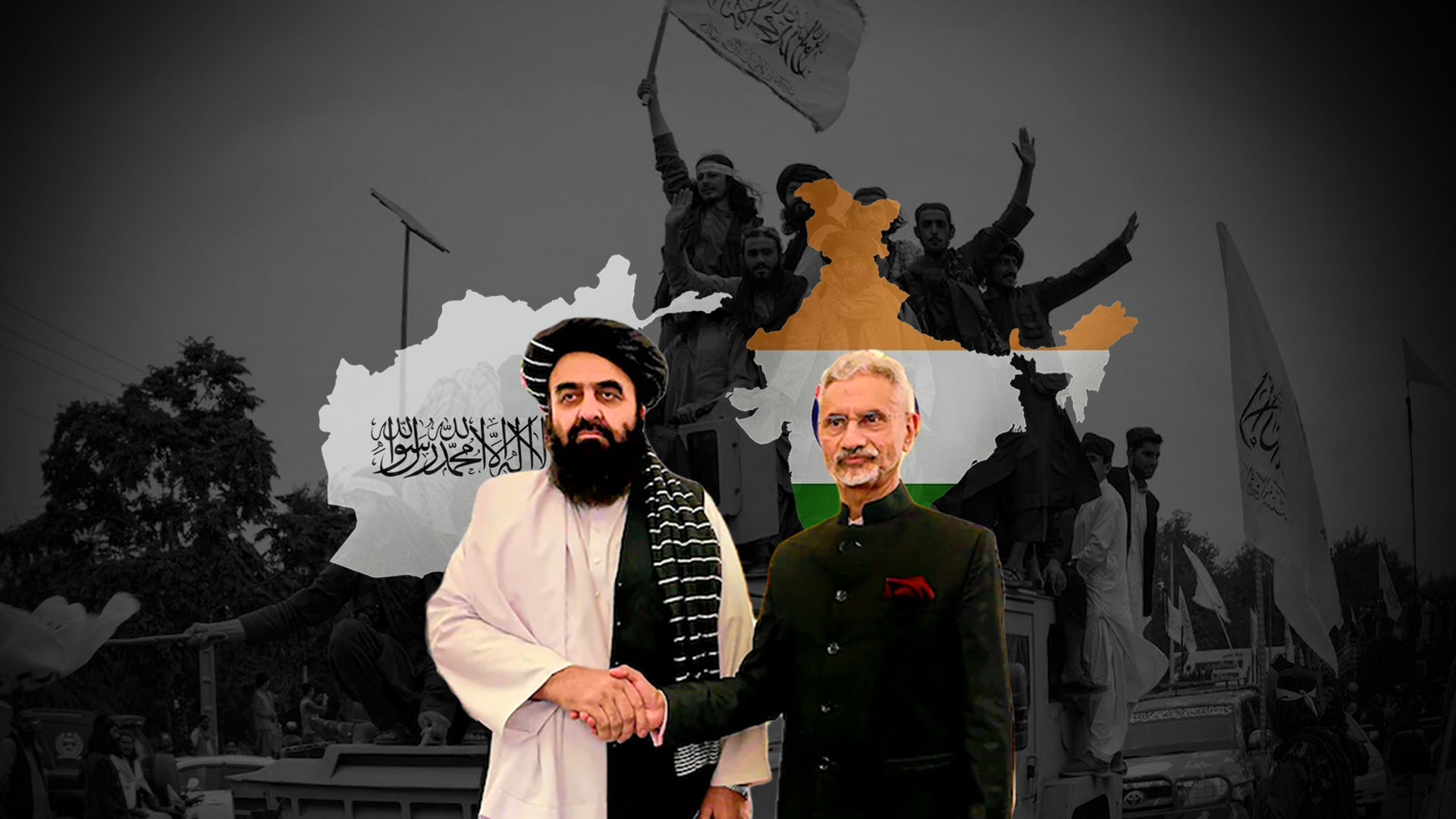
During his recent visit to New Delhi, Ataullah Omari, the Taliban’s Minister of Agriculture, Irrigation and Livestock, praised India for its warm hospitality stating that the people of Afghanistan feel closely connected to India and that “our DNA is one.”
Indian media headlines tilted on Mr Omari’s praises as he said, “This is my first trip to India. From the very first day I landed in India, I received a warm welcome from the Indian government, the Minister of External Affairs, and everyone I met,”
“It feels as if I am among my own people. It feels like our own country, and as you mentioned, our DNA is one,” Omari added.
The world must not fall prey to India Taliban narratives. It has harmed and brought hardship to the people of Afghanistan in the last five years. The Taliban assumes the people of the world are clowns to contemplate DNA narrative.
These may be comforting words for both Taliban and Indian counterparts sitting across the table on expanding bilateral cooperation with an illegitimate faction who continue to remain under the United Nations Terrorist sanctions list.
In the last five years, has the world seen Taliban’s people-oriented stance or has India given any priority to the people of Afghanistan’s needs? The need for advocating an inclusive government and Afghan women’s rights has been ignored by India without paying any heed to the call of Afghan people’s plight.
It is ought to be the Taliban for its misdeeds committed on its own people since it has come to power in 2021. Exploiting the young innocent people and glaringly, continue to impose education ban on Afghan girls.
Are these adulterated actions of the Taliban not visible to India?
Any sensible government like India should have prioritised Afghan people’s apathy than allowing Taliban to go on endlessly. It is a sheer imagination of India-Taliban as the same DNA. Indeed, a self-induced mental madness of India and the Taliban!
Irony of Taliban India ties in an uncoordinated manner, each working towards their own geopolitical interests speaks volumes. India ought to have first put in place a mechanism to solve the legitimacy issue before entering into any dialogue or discussion with the Taliban.
The question arising with regard to Taliban India DNA ties are as under:
1. Without instituting the rules, why is India endorsing all these aggressions of the Taliban being committed on the Afghan people?
2. Should the regional countries of the world, including India be mere spectators to the goings on with the Taliban committing lawlessness in Afghanistan?
3. Being India, the fourth largest economy widening its 56-inch chest, why can’t India tell the Taliban to end its aggression and to tell them to behave in a civilised manner?
4. India purposefully did not contest these illegitimate actions of the Taliban-with an approach "The enemy of my enemy is my friend," to fight proxy wars between India and Pakistan through the Taliban. The question is, is the moral compass and the logical compass for its engagement with people of Afghanistan losing humane sanity?
Let it not be missed. The innocent Afghans are paying a heavy price for these proxy wars today. As per the media reports, Pakistanis are preparing to deport another 20,000 undocumented Afghan nationals.
India-Taliban DNA Matching?
India’s Permanent Representative to the United Nations, Ambassador Parvathaneni Harish, at the United Nations Security Council meeting on the situation in Afghanistan on March 9, 2026, at UN Headquarters in New York, said, “We add our voice to Secretary General’s call on Member States to uphold their international obligations in relation to protection, including the principle of non-refoulement and ensure that returns are voluntary, safe, dignified and accompanied by sustained support for reintegration of returnees into communities,”.
According to the Khamma Press News Agency May 22 report, “Around 120 Afghan refugee families in New Delhi say they have received emails from India’s Foreigners Regional Registration Office (FRRO) instructing them to apply for exit permits and leave the country within 30 days.”.
India is not a signatory to the 1951 Geneva Convention for Refugees but India is obligated to the principle of customary international law principle of non-refoulement, codified under Article 33 of the 1951 Refugee Convention which stipulates that individuals cannot be returned to their country if they will face cruel and degrading treatment. India has also signed the Convention Against Torture and Other Cruel Inhuman or Degrading Treatment or Punishment (CAT) and the International Convention for the Protection of All Persons from Enforced Disappearance (ICPPED). These two treaties explicitly prohibit the return of those who face danger to their life or freedom. Thus, despite not signing the Refugee Convention, India must still provide protection to those fleeing persecution.
Additionally, the Indian Supreme Court has interpreted Article 21 of the Constitution to protect the fundamental rights of non-citizens, providing some judicial recourse against arbitrary deportation.
The UN High Commissioner for Human Rights Volker Türk condemned the forced repatriations of refugees and asylum-seekers to Afghanistan by countries in the name of concerns over national security or economic strains, deeming it a clear violation of international human rights law.
This is in sharp contrast to the Times of India report dated Sep 7, 2021, the Ministry of Home Affairs (MHA) has taken control of "exit order" decisions of the Foreigners' Regional Registration Office (FRRO) in case of Afghan nationals residing in India. "As per the order, if any Afghan national wants to live in India and he or she is not able to submit his or her document fulfilling the criteria to stay here before FRRO, the matter will go to the MHA for its final decision in case FRRO issues them 'Leave India Notice'," a senior Home Ministry official stated. Afghan nationals already in India on any category of visa will be granted an extension of visa under guidelines issued separately for Afghan nationals."
The question is, why this reverse in policy today and why would Afghan refugees and asylum seekers approximately 22,000 in number registered under the United Nations High Commissioner for Refugees (UNHCR) living in India for several decades who fled the Taliban would volunteer to return to Afghanistan knowing the fact women face humiliation, abuse, and systematic oppression to return to Afghanistan?
India took a similar step before handing over the legitimate mission to an illegitimate entity by stopping issuing visas to any of the Afghan diplomats appointed by the legitimate government of Afghanistan in 2023 but offered them free visas to exit.
Thus far, India instead of helping the Afghans have normalised the Taliban for political gains which is neither pragmatic, nor strategically imperative or have any moral credibility that will improve the lives of Afghans who are forcibly displaced from their country.
Does India's Stand on Afghan women’s Rights match Taliban’s DNA?
Taliban’s ill-thought-out move on education ban continued since 2021 leaving 2.2 million adolescent girls and women out of school. The Head of the Taliban's Council of Scholars Din Mohammad, said, Afghan girls’ education is “absolutely forbidden,” calls science and technology “useless,” and claims women belong only in the home.
Initially, the Taliban said they were "working to improve the security situation", It is Over 5 years, the Taliban spilled different narratives in response to the question of lifting the education ban for women and girls.
Despite seeing this violation of the fundamental rights of Afghan women and their challenges, India doesn’t seem to have realised its engagement with the Taliban did not help the people of Afghanistan in the last five years by any means and by any measure.
Followed by Taliban Foreign Minister Aamir Khan Muttaqui’s visit to India in October 2025; India seated an unrecognised and illegitimate Taliban official in New Delhi in January this year.
The question is, whether the illegitimate Embassy in New Delhi represents or caters to the people-oriented needs apart from the doles that India have been sending without addressing the legitimate issues of the people?
Most importantly, India has been selling the narrative projecting its engagement with Afghanistan continues to focus on capacity building and humanitarian assistance for the Afghan people. On the contrary, this narrative does not help people whose fate is deeply entrenched in illegal deportation, India Pakistan proxy war, cross border firings, persistent natural calamities, economic hardships and accidents. India’s people-oriented narrative falls short in words and in actions.
Should India’s Assumed DNA Matching with Taliban secure the non-permanent seat on the UNSC?
India’s External Affairs Minister S Jaishankar is set to launch India's campaign for a non-permanent seat on the UN Security Council for the 2028-29. In its message for its UNSC candidature, India has highlighted “#India4UNSC 2028-29 Peace, Planet, Progress.”
What have been India’s stand in articulating ‘Peace, Planet, Progress’ with regards to the challenges in Afghanistan under the Taliban, the Ukraine war, Gaza conflict and the US-Israel war against Iran in campaigning for the forthcoming non-permanent seat at UNSC?
India failed to strengthen Brazil, Russia, India, China, and South Africa (BRICS) and South Asian Association for Regional Cooperation (SAARC) is dead. Did India revive SAARC?
India failed to take effective and principled position on crises; Afghanistan, Gaza, Lebanon, Iran etc. On what basis India demand reform of UNSC? Did India demonstrate regional leadership, diplomatic coherence and moral credibility?
UN Security Council Resolution 2593—adopted during India’s presidency in 2021 and 2022—reaffirmed Afghanistan’s sovereignty, independence, territorial integrity, and national unity, and called for an inclusive political settlement with the full, equal, and meaningful participation of women. India abstained itself from voting against the Taliban, this resolution reflects a complete disillusionment of India’s commitment and an act of blatant disregard to Afghanistan and as well as for the dignity of the Afghan people.
Lt. Gen. Prakash Katoch in his article dated 3 March, published in ‘The Strategic Perspective’ magazine, stated that “India’s foreign minister S Jaishankar, architect of India’s defunct regional policy (break from Iran included), embracing Taliban and installing a Taliban ambassador in New Delhi who first met the radical Yunus regime in Bangladesh, and bending backwards to the US with India seizing Iranian oil tankers, is shocked with the US-supported Pakistan bombing Taliban. He is busy telephoning all over but can’t anymore brag about India’s strategic autonomy, which India surrendered in face of the US-Israel war on Iran. Prime Minister Narendra Modi’s call for restraint has the same value as UN Secretary General António Guterres calling for it. But Modi’s unequivocal support to Israel, and no sympathy for bombings of Iranian hospitals and schools (leave aside assassination of Ayatollah Khamenei) indicates supports Israel killing 73,0000+ Palestinians since October 2023 in Gaza (of which Hamas is only a part), Israel continuing operations in Gaza despite a ceasefire and the brutal expansion in West Bank despite UN condemnation”.
India's campaigning for a UNSC seat advocating for reforms ignoring the fact that for sustaining peace, the importance of equality, social justice, and women’s rights cannot be overlooked as they are a part of the peace and stability-building process of a country. This approach recognizes that sustainable peace cannot be achieved as long as there are no consensus-based rules, or institutions to monitor and implement rules which do not exist under Taliban-ruled Afghanistan.
As per the Aljazeera News report dated June 2026, “Since the start of Israel’s genocidal war on Gaza on October 23, more than 73,000 people have been killed. Most of the territory has been turned into rubble, and nearly 1.9 million people have been displaced”.
As per UNICEF’s report more than 50,000 children have reportedly been killed or injured since October 2023. The United Nations has referred to Gaza as a “graveyard for children”. More than 4,000 who make up about 40% of the casualties are said to be children.
What has been India’s unequivocal stand for the people of Palestine? Instead, Prime Minister of India, Narender Modi received accolades from Israel, ‘Speaker of the Knesset Medal’ this year illustrating India’s actual clout on global diplomacy.
There is an immediate need to building a more peaceful and equal world. The meaning of peace is just not the absence of war, but it’s more than that. To avoid war, we need to be able to build bridges, combat discrimination, struggle for justice and human rights for all, make people respect each other, and make people see their identities respected but at the same time feel that they belong to the larger community where they are integrated.
The world is combating some of the key threats to peace and security, including terrorism, violent extremism, and drug trafficking and organized crime. These are complex challenges that require a collective response, as no country can effectively confront them alone.
India needs to retrospect: what lessons can be drawn from this? The world has witnessed far too many illegal wars—Afghanistan, Syria, Libya, Lebanon—each leaving behind a trail of broken nations and displaced lives.
A prolonged conflict will adversely affect the flow of oil from the Middle East to various parts of the world. Iran has blocked the Strait of Hormuz, through which more than 20 percent of the world’s oil flows. The Israel-Iran war not only threatens this crucial artery for oil flow but also endangers regional stability and the global economy. A prolonged conflict in the region will destroy investor confidence, delay the Gulf Cooperation Council states (GCC) national diversification agendas, and threaten the Gulf’s long-term economic well-being.
India needs to keep in mind the linkages between peace, good governance, economic development, eradicating poverty, internal stability of countries and the compulsions of following a rule-based world order before campaigning for the non-permanent seat at the UNSC.
The present UNSC continues to be a relic of the cold war with three democratic countries and two socialist/communist countries. They exercise their veto powers on the same dividing lines. The world needs a neutral body like UNO with adequate powers to enforce agreed-upon rules to ensure peace and stability.
As long as the people are not the focus of the government and every policy is top driven with no feedback by the opposition, press and civil society, there can be no claim of good governance which is prevalent in the Taliban-ruled Afghanistan.
Governments have to create an environment where entrepreneurs get support to establish industry, generate jobs and run the wheels of the economy. Government should remain a facilitator. When the government keeps discretionary powers like the Taliban is doing, it has resulted in cronyism and fueling corruption in Afghanistan.
The Big Question is-
How should the UNO be restructured to enable the world to derive maximum benefit from the organisation to bring in stability and peace in the world aimed at the wellbeing of people?
How should the world go about ushering in legitimate governments in conflict-ridden areas including in Afghanistan? Should the world not shed its obsession with religion, caste, sects and subsects, colour etc to unite and make living a pleasurable thing?
To advance the goals of humankind in the most trying circumstances, India’s aim to secure the UNSC seat needs to circumvent around people not politics who are reeling under unmanageable wars.
Can India work on these lines and find a solution for the people of Afghanistan without establishing a DNA tie with the Taliban?
India has a choice; the project of proxy war needs to be ended to usher peace in Afghanistan.
Suggest evaluate these issues in an unbiased manner to formulate India's foreign policy to elevate the historical India-Afghanistan ties not the Taliban and India DNA ties.
Neelapu Shanti is a New Delhi Based international affairs research analyst, writer, journalist and Indo-Afghan analyst. MA in International Relations Post-Graduate in Journalism.
Academicians and Officials interested in publishing their academic pieces on this page, please approach us through contact@aissonline.org.
The article does not reflect the official opinion of the AISS.